Products
The Hardest Software I Want to Build Is a Home That Remembers
May 31, 2026
There is a kind of tiredness that does not come from doing the thing.
It comes from remembering the thing.
Remembering that a recurring chore is due. Remembering that a bill needs to be paid. Remembering that someone had agreed to call a vendor. Remembering that a decision was discussed last week, but never actually closed.
This is not productivity in the clean, dashboard-friendly sense of the word.
This is household entropy.
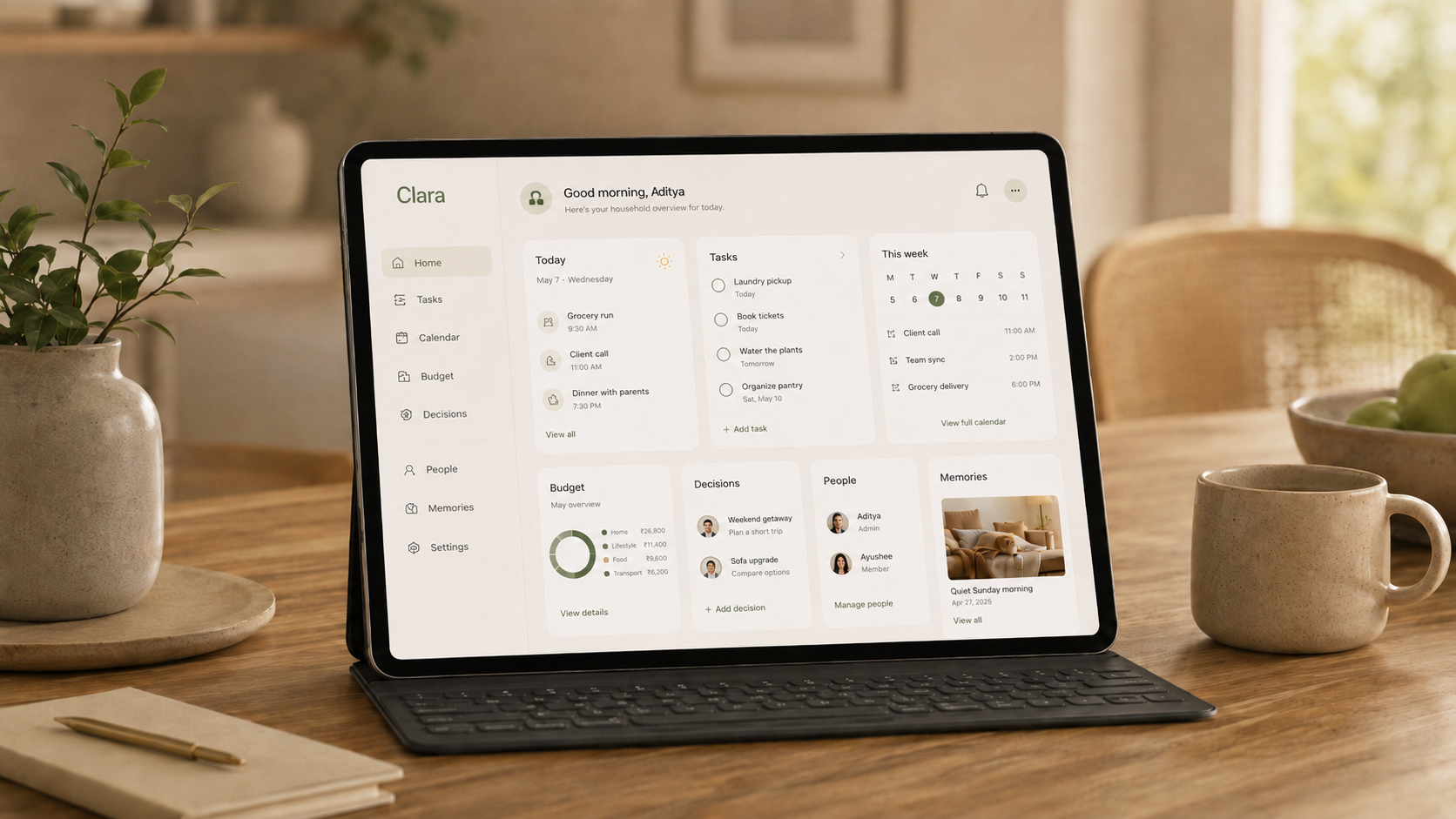
I have been working on Clara, currently in alpha, as an attempt to solve this. Clara is a household operating system: a shared layer for tasks, decisions, calendars, budgets, routines, and the quiet context that usually lives in one person’s head.
The goal is not to build a sci-fi butler.
It is to answer a simpler, harder question:
Can software help a household remember, coordinate, and decide without becoming another thing to manage?
Most homes already use plenty of software. Chat apps, calendars, notes, spreadsheets, banking apps, task lists. Each tool understands one slice of life. But a household does not experience life in slices.
A dinner decision may depend on who is home, how busy the evening looks, what groceries are available, what the budget looks like, and whether everyone has the energy to make a fresh decision.
A maintenance task may start as a casual comment, become a repeated annoyance, turn into a vendor search, and then sit unresolved for weeks because nobody clearly owns it.
A recurring chore may not need deep AI at all. It may just need to appear at the right time, for the right person, without creating guilt or noise.
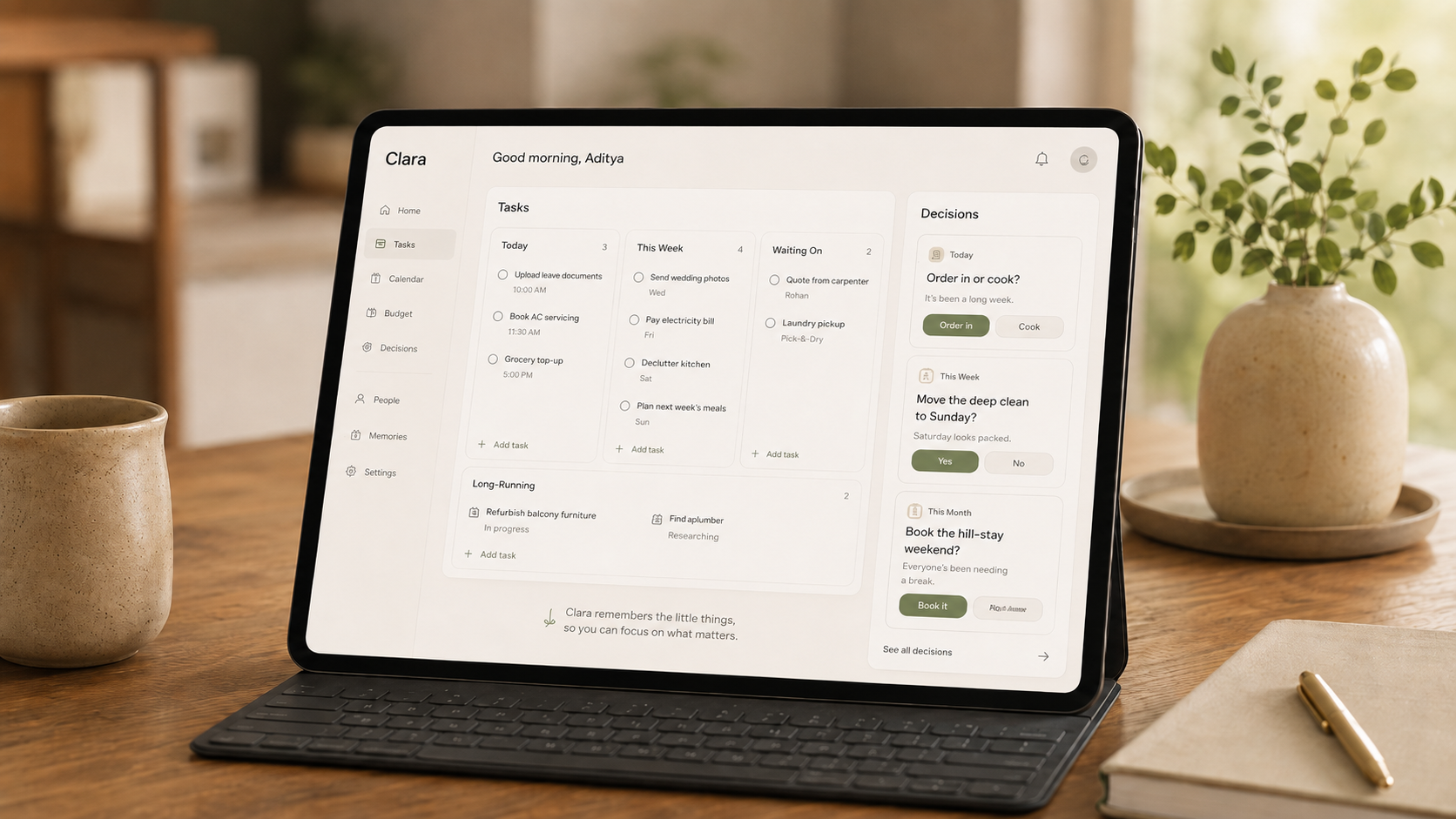
That messy middle is where Clara is starting.
Not with tasks as checkboxes.
Not with decisions as meeting notes.
But with the everyday coordination layer of a household: repeated chores, one-off errands, long-running decisions, shared responsibilities, and unresolved threads that quietly become mental load.
This is also where I think AI can be useful — not as a genius, but as a memory layer.
A good household assistant should understand that “we should fix the balcony light” is not just a sentence. It might be a pending task, a future expense, a weekend errand, or something worth ignoring until it comes up again.
It should be able to say:
“You discussed this last week. Should I turn it into a task?”
“This has been pending for a while. Do you want to decide, delegate, or drop it?”
“Dinner is undecided, and everyone is busy tonight. Want to pick from your usual low-effort options?”
But there is a line here.
The more personal the context, the more careful the system has to be.
A household memory system cannot behave like a generic chatbot memory. It needs tenant-specific memory, clear permissions, visibility controls, and a strong sense of what should be remembered, what should be hidden, and what should quietly expire.
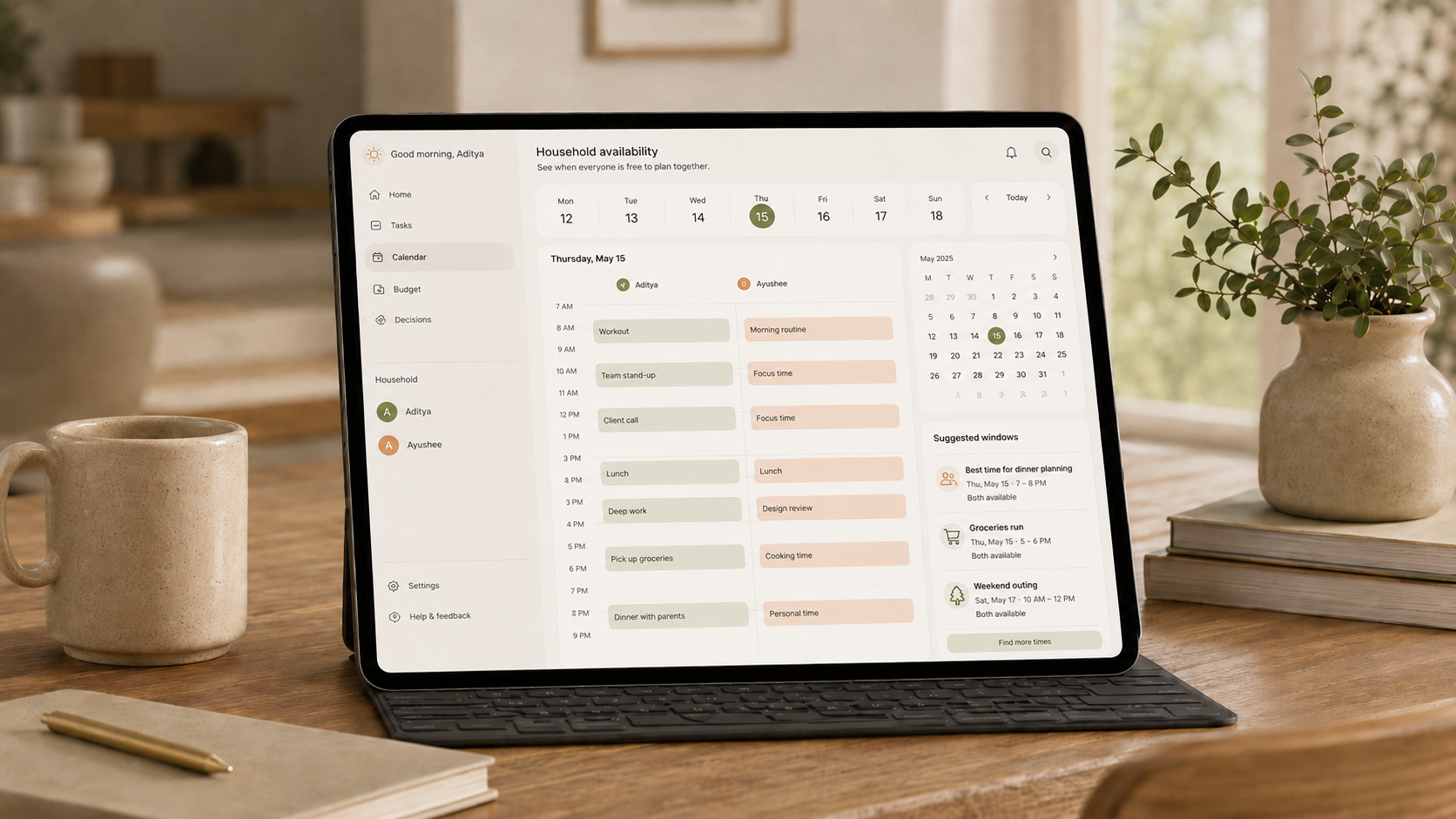
The product challenge is not just making Clara smart.
It is making Clara calm.
Most productivity software makes you feel slightly guilty. There is always an overdue task, a red badge, a dashboard you have not updated, or a routine you have failed to maintain.
That might work for offices.
It is exhausting for homes.
Homes do not need Jira with warmer colors.
They need something closer to a quiet shared memory.
A system that helps surface what matters, close what is unresolved, and reduce the number of things silently living in someone’s head.
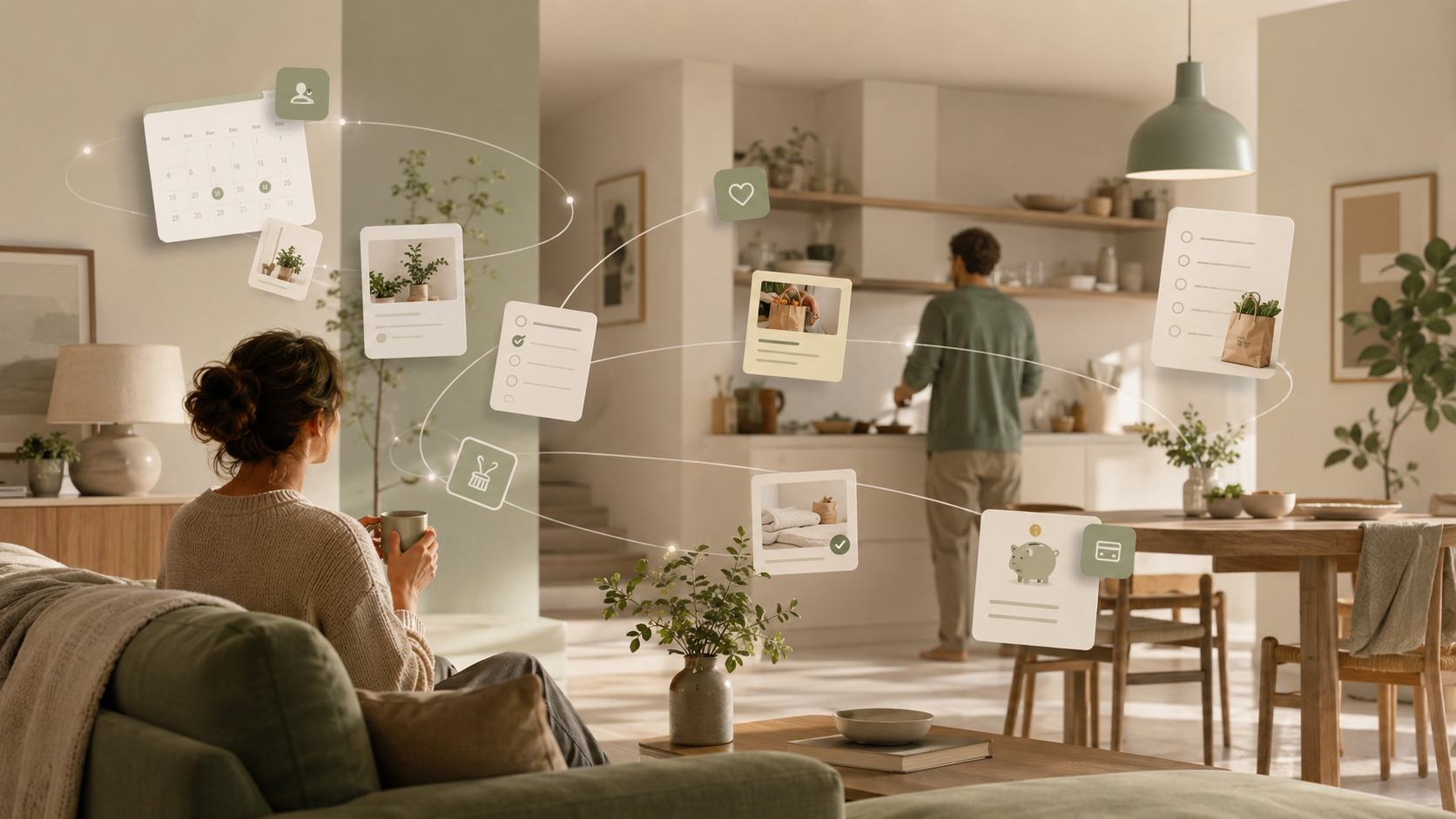
The best version of Clara will not feel like an app that manages your home.
It will feel like the home finally remembers with you.